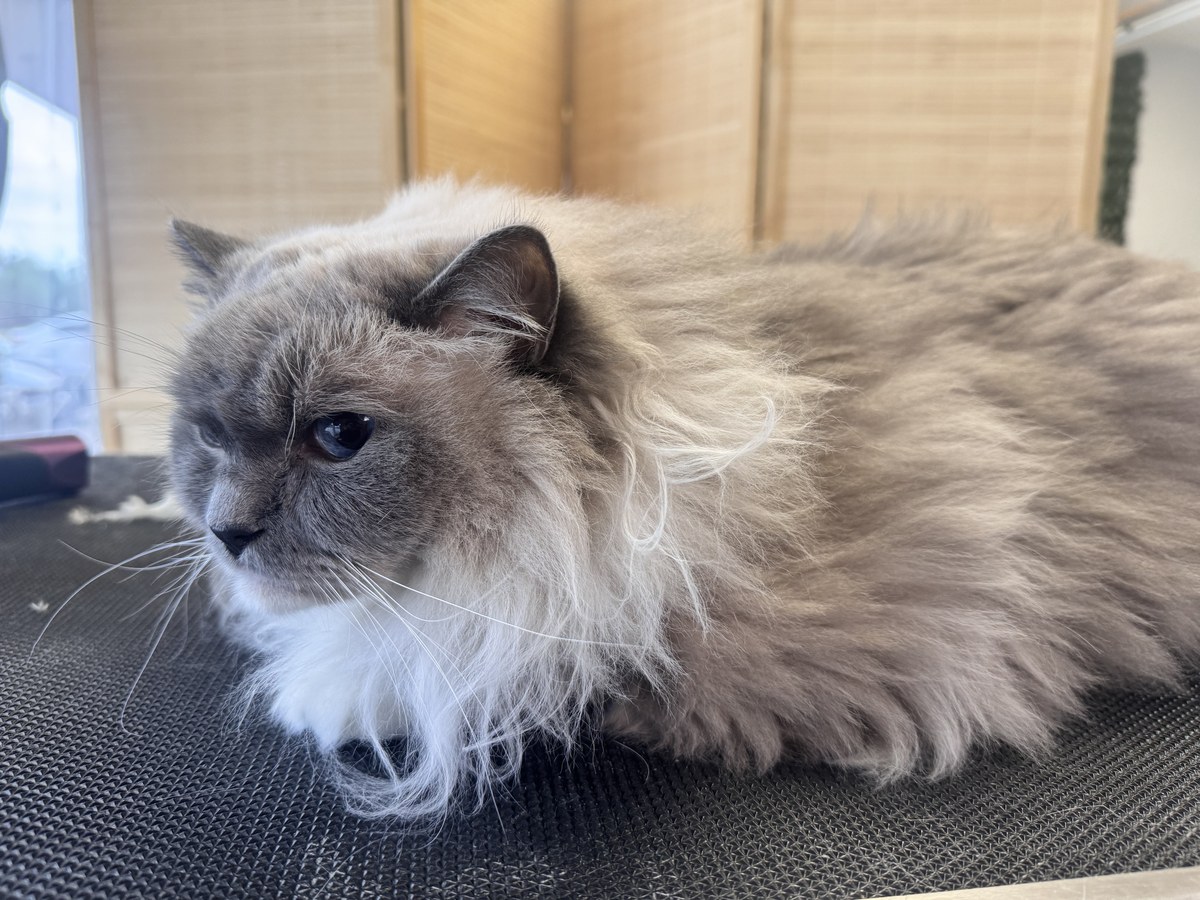
What Changes as Cats Age
Joints become less flexible — sometimes significantly if arthritis is present. Skin thins and becomes more sensitive to pressure and temperature. Muscle mass decreases. The immune system is less robust. Cognitive changes can increase anxiety responses, making unfamiliar environments more unsettling. Many senior cats develop underlying health conditions that first manifest in coat changes — thyroid issues, kidney disease, and diabetes can all appear in the coat long before formal diagnosis.
How We Adapt for Senior Cats
Senior cat sessions at Bark & Purr are shorter with more rest breaks. Positioning is adapted for joint discomfort — we never force a cat into a position their body resists. Water temperature is carefully regulated. Handling pressure is lighter. We spend more time in the assessment phase, noting changes since their last visit and flagging anything worth a veterinary conversation.
The Health Benefits Are Even More Critical
Because senior cats are less able to self-groom effectively, the health benefits of professional grooming become more important — not less. Mats form faster. Skin issues go undetected longer. Nail overgrowth becomes a genuine mobility problem. The social connection with a calm, trusted handler has real wellbeing value for cats experiencing cognitive changes.
The best time to establish a grooming relationship is before senior years. But cats who have never been professionally groomed can absolutely start — with more patience and a longer trust-building process. We'll take it at their pace.