Questions to Ask Before You Book
Do you groom cats and dogs in the same space? (A shared space means your cat will hear, smell, and potentially see dogs — significant stressors.) How do you handle a distressed cat? (Answer should include slowing down, breaks, stopping — never forcing.) How many cats do you see per day? (High volume is a red flag. Cats don't adapt well to busy, fast-moving environments.) Can I see your grooming space before booking? (Any groomer worth trusting will say yes.)
What a Calm, Low-Stress Groomer Looks Like
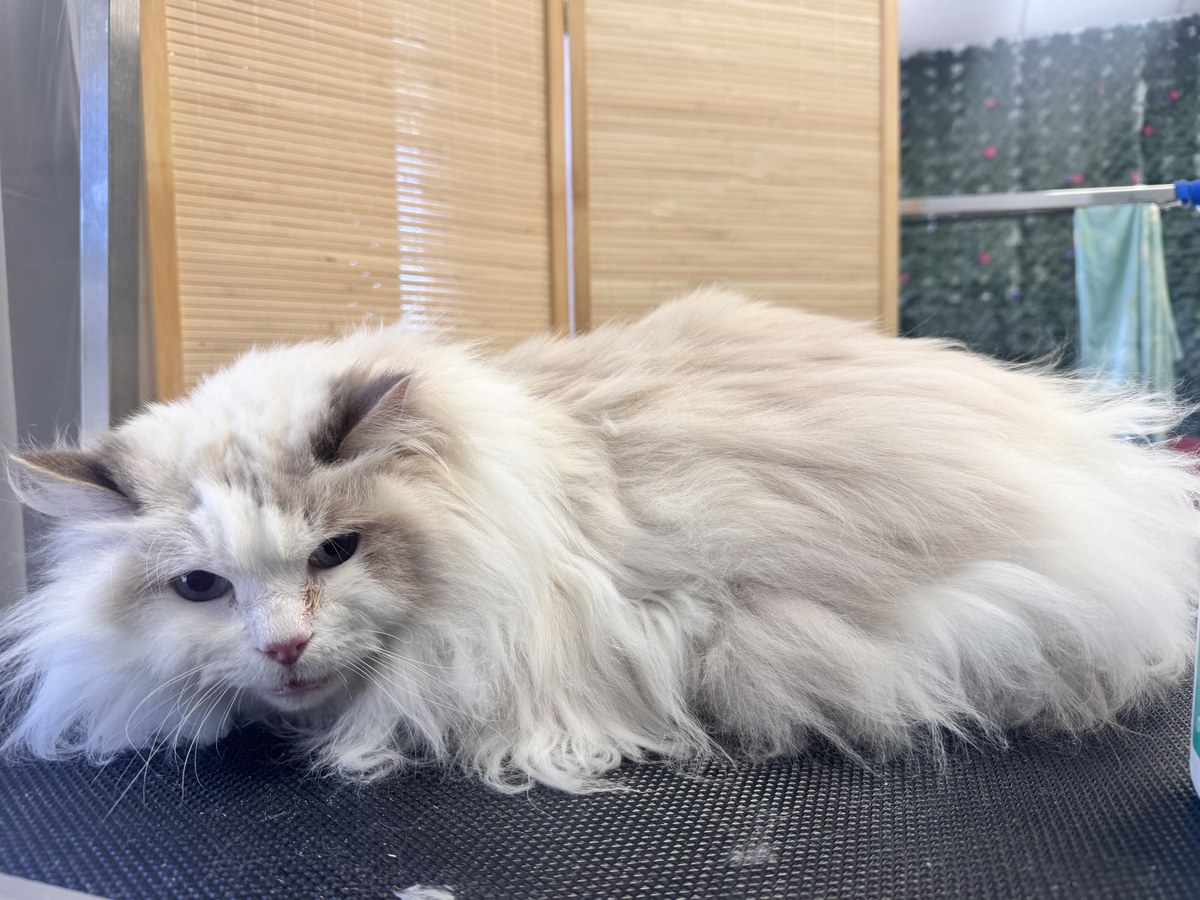
A good cat groomer reads body language: flattened ears, a twitching tail, a stiff body, a cat that goes very still. They slow down when they see it, give breaks, and stop when a cat has had enough. They keep the space quiet, handle gently, and put the cat's comfort ahead of finishing the groom. Ask how they've been trained and what they do when a cat gets upset. A clear, specific answer is a good sign.
Red Flags to Walk Away From
Heavy restraint or groomer loops used routinely on cats. No follow-up communication after appointments. Dismissing your cat's behavior as "just how cats are." Not asking about your cat's history, health status, or previous experiences before their first visit. A grooming space that smells primarily of chemical cleaners, or that feels loud and chaotic.
We built this series because informed Cat PAWrents make better decisions for their cats — wherever those decisions land. If you choose Bark & Purr, we will prioritize your cat's emotional safety, communicate honestly, and celebrate every sign of trust. If you choose someone else, we hope this series helps you ask the right questions. Either way — your cat wins.