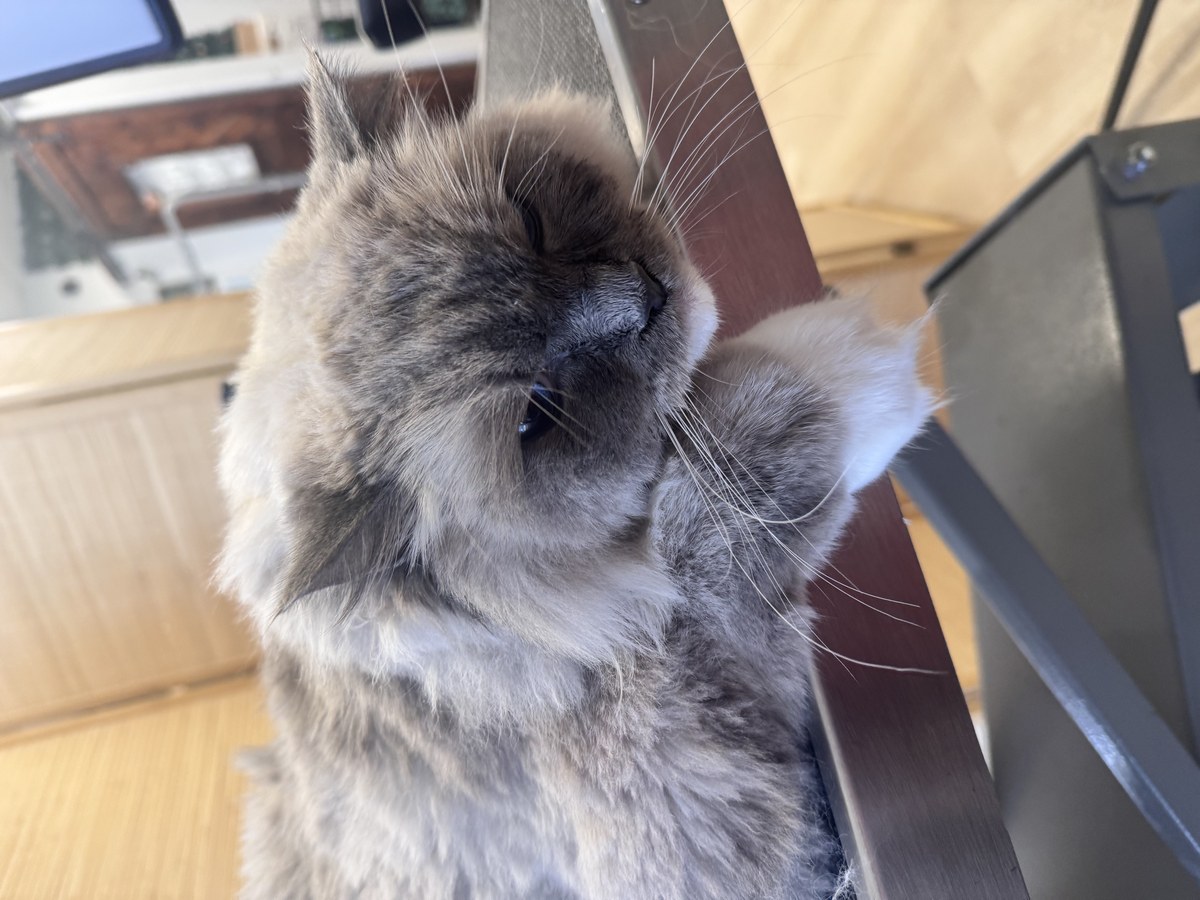
What Happens Inside a Stressed Cat
When a cat perceives a threat — whether a genuine predator or a loud blow dryer — their body responds identically. Cortisol and adrenaline flood the system. Heart rate climbs. Digestion slows or stops. In the short term, this is survival. In the long term, when triggered repeatedly, it becomes a health problem.
Chronic stress in cats is linked to: upper respiratory infections (stress suppresses immune function), inflammatory bowel disease and digestive upset, feline idiopathic cystitis (stress-triggered bladder inflammation), over-grooming and psychogenic alopecia, and anxiety disorders that worsen over time.
What Fear-Free Grooming Actually Means
At Bark & Purr, Fear-Free means cats are never in a shared waiting area with dogs. Grooming happens in a calm, controlled environment — lighting, scent, sound, and temperature all considered. Handling is slow, deliberate, and adjusted to each cat's tolerance in real time. We never push through stress signals. We slow down, pause, or stop. The goal is a cat who leaves calmer and more trusting than when they arrived.
A significant grooming stress event can take 24–72 hours for a cat's nervous system to fully metabolize. That's why your cat hides after grooming — not because they're dramatic, but because they're recovering. Fear-Free grooming changes this over time.